
Electric vehicles trends 2026 point toward a major shift in how people buy, drive, and charge their cars. Battery technology is improving fast. Prices are dropping. Charging stations are popping up everywhere. And autonomous features are becoming standard rather than optional.
The EV market has matured significantly over the past few years. What was once a niche segment now represents a growing share of global car sales. By 2026, analysts expect electric vehicles to account for nearly 25% of new car purchases worldwide. That’s not a prediction, it’s a trajectory based on current manufacturing commitments and consumer demand.
This article breaks down the four biggest electric vehicles trends 2026 will bring. From solid-state batteries to $25,000 EVs, here’s what buyers and industry watchers need to know.
Table of Contents
ToggleKey Takeaways
- Electric vehicles trends 2026 include solid-state batteries that offer faster charging, longer range, and improved safety compared to current lithium-ion technology.
- By 2026, EVs are expected to account for nearly 25% of new car sales worldwide, with mid-range models offering 350+ miles per charge.
- Affordable EV models priced under $30,000—some as low as $25,000—will make electric car ownership accessible to average households.
- Charging infrastructure is expanding rapidly, with the U.S. targeting 500,000 public chargers by 2026, up from 180,000 in 2024.
- Level 2+ autonomous driving features, including hands-free highway driving and automatic lane changes, will become standard on most new EVs.
- Smart features like over-the-air updates and vehicle-to-grid (V2G) technology will transform EVs into connected devices that integrate with energy systems.
Advancements in Battery Technology and Range
Battery technology remains the single most important factor in EV adoption. In 2026, several breakthroughs will hit the mainstream market.
Solid-state batteries are the headline story. Unlike current lithium-ion batteries that use liquid electrolytes, solid-state versions use solid materials. The result? Higher energy density, faster charging times, and improved safety. Toyota, Samsung SDI, and several Chinese manufacturers have announced production timelines targeting 2025-2026.
Range anxiety, that nagging fear of running out of charge, is fading. The average EV range in 2024 sits around 270 miles. By 2026, expect that number to climb past 350 miles for mid-range models. Premium electric vehicles will push beyond 500 miles on a single charge.
Charging speed is improving too. Current fast chargers add roughly 200 miles of range in 30 minutes. New 800-volt architectures and improved battery chemistry will cut that time significantly. Some manufacturers promise 10-80% charges in under 15 minutes.
Battery costs continue their downward trend. In 2023, the average cost per kilowatt-hour dropped below $140. Industry experts predict costs will fall to $100/kWh or lower by 2026. This price point is considered the tipping point where EVs reach cost parity with gas-powered cars without subsidies.
These electric vehicles trends 2026 will bring mean longer trips with fewer stops. That’s a game-changer for consumers who’ve been sitting on the fence.
The Rise of Affordable EV Models
Price has been the biggest barrier to EV adoption. That barrier is crumbling.
Multiple automakers have announced plans to release electric vehicles priced under $30,000 by 2026. Some are targeting the $25,000 mark. Tesla’s long-promised affordable model, Chevrolet’s next-generation Bolt replacement, and several offerings from Chinese manufacturers like BYD will compete in this space.
The math is straightforward. Lower battery costs plus simplified manufacturing equals cheaper cars. Many new affordable EVs will use lithium iron phosphate (LFP) batteries instead of nickel-based alternatives. LFP batteries cost less and last longer, though they offer slightly lower energy density.
Used EV prices are dropping as well. As lease returns flood the market and newer models debut, three-year-old electric vehicles are becoming genuinely affordable. A 2023 study found that used EV prices fell 30% year-over-year, faster than any other vehicle category.
Government incentives remain a factor, though they vary by region. In the United States, federal tax credits of up to $7,500 can make a $30,000 EV cost the same as a $22,500 gas car. Several states offer additional rebates.
The electric vehicles trends 2026 will accelerate include democratization of EV ownership. Electric cars won’t just be for early adopters and high earners anymore. They’ll be practical choices for average households.
Expansion of Charging Infrastructure
You can’t drive an EV without somewhere to charge it. Fortunately, charging infrastructure is expanding rapidly.
The United States alone is adding thousands of new public charging stations each month. The federal government’s $7.5 billion investment through the Infrastructure Investment and Jobs Act is funding installations along highways and in underserved communities. By 2026, the goal is 500,000 public chargers nationwide, up from roughly 180,000 in 2024.
Europe is moving even faster. The EU’s Alternative Fuels Infrastructure Regulation mandates charging stations every 60 kilometers along major highways. China already has over 2 million public chargers and continues building at a remarkable pace.
Charging reliability is improving alongside quantity. Early public chargers had frustrating failure rates. Network operators are now investing in maintenance and monitoring. Uptime rates above 95% are becoming standard expectations rather than aspirations.
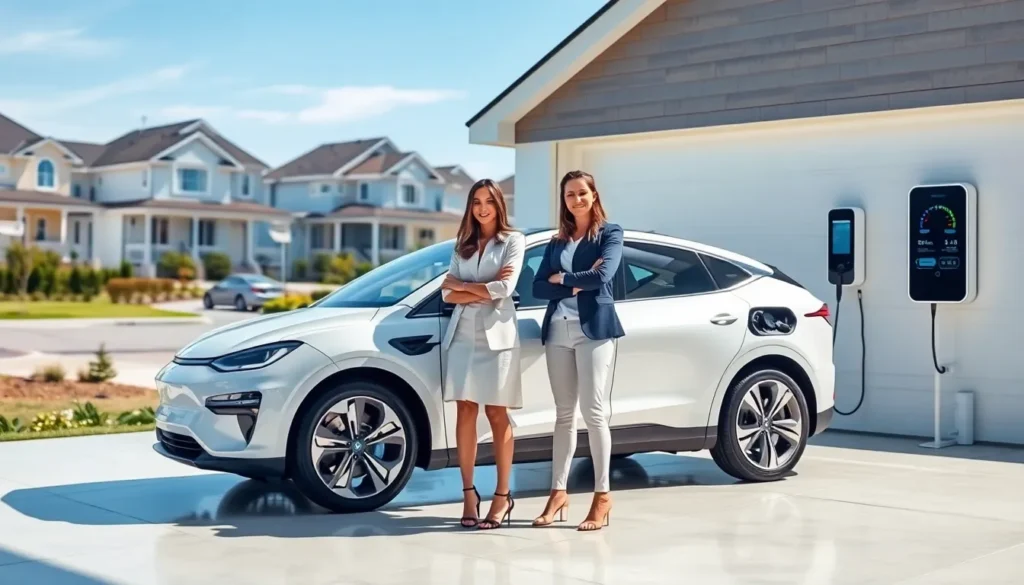
Home charging remains the primary method for most EV owners. About 80% of charging happens at home. Level 2 chargers (240-volt) can fully charge most EVs overnight. Installation costs have dropped, and many utilities offer reduced electricity rates for off-peak charging.
Workplace charging is another growing trend. Companies are installing chargers in employee parking lots as a benefit. This approach works especially well for apartment dwellers who can’t install home chargers.
These electric vehicles trends 2026 infrastructure developments address one of the last major objections to EV ownership. Finding a charge will become as routine as finding a gas station.
Autonomous Driving and Smart Features
Electric vehicles and advanced driver assistance systems go hand in hand. The same computers and sensors that manage battery systems can also enable autonomous features.
By 2026, Level 2+ autonomous driving will be standard on most new EVs. This means hands-free highway driving with automatic lane changes, on-ramp/off-ramp navigation, and traffic jam assist. Drivers must remain attentive, but the car handles routine driving tasks.
Level 3 autonomy, where the car takes full responsibility in certain conditions, is rolling out more slowly. Regulatory approval varies by region. Mercedes-Benz has received certification for Level 3 systems in Germany and Nevada. Other manufacturers are pursuing similar approvals.
Over-the-air updates keep EVs current. Unlike gas cars that stay static after purchase, electric vehicles receive software improvements throughout their lifespan. New features, performance improvements, and bug fixes arrive automatically. This approach extends vehicle life and maintains resale value.
Connectivity features are expanding too. Vehicle-to-everything (V2X) communication allows EVs to interact with traffic lights, other cars, and infrastructure. This technology improves safety and traffic flow. Several cities are piloting V2X systems that will mature by 2026.
Smart charging integration is another key development. EVs can automatically charge during periods of low electricity demand or high renewable energy production. Some utility programs even pay EV owners to discharge power back to the grid during peak demand, a concept called vehicle-to-grid (V2G).
These electric vehicles trends 2026 smart features will deliver make EVs more than transportation. They become connected devices that integrate with broader energy and transportation systems.