
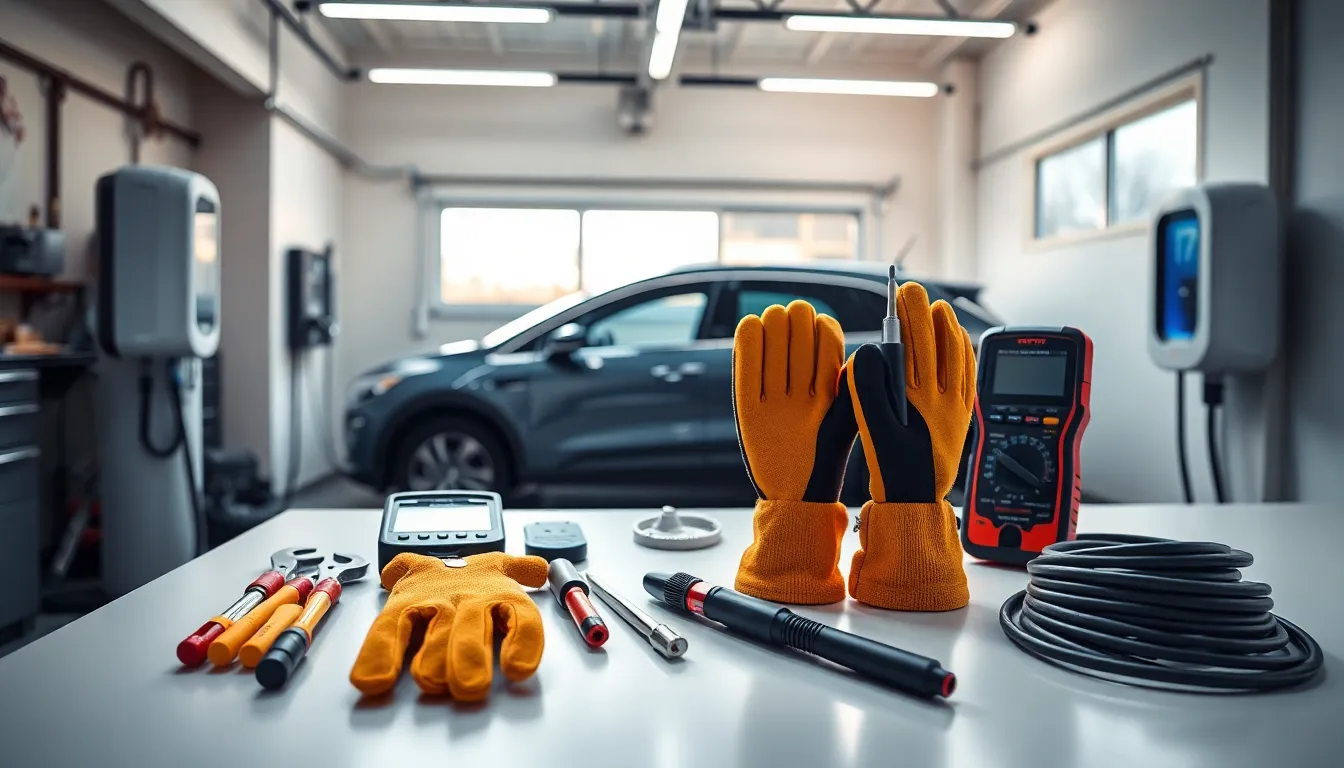

Electric vehicles tools differ from traditional automotive equipment in important ways. EV owners need specific gear to handle high-voltage systems, battery maintenance, and unique charging requirements. Whether someone plans to perform basic upkeep or diagnose minor issues at home, having the right electric vehicles tools saves time, money, and potential headaches. This guide covers the essential equipment every EV owner should consider adding to their garage.
Table of Contents
ToggleKey Takeaways
- Electric vehicles tools must include insulated equipment rated for high-voltage work since EV battery systems run between 400–800 volts.
- A quality OBD-II scanner compatible with EVs lets owners read fault codes, monitor battery health, and track charging efficiency.
- Insulated gloves rated for at least 1000V protection and VDE-certified hand tools are mandatory safety gear for any EV maintenance.
- A Level 2 home charger (240V EVSE) and portable charging cables are essential electric vehicles tools that reduce charging time and provide backup options.
- Standard maintenance still requires basic tools like torque wrenches, jack stands, and tire pressure gauges—but choose equipment rated for heavier EV weights.
- Complex repairs involving high-voltage batteries should always be handled by certified technicians with proper training.
Why EVs Require Specialized Tools
Electric vehicles operate differently than gas-powered cars. They use high-voltage battery packs, regenerative braking systems, and electric motors instead of internal combustion engines. These differences mean standard automotive tools don’t always work, and in some cases, using the wrong equipment creates serious safety risks.
The battery systems in most EVs run between 400 and 800 volts. That’s enough power to cause severe injury or death if handled improperly. Standard metal tools can conduct electricity and create dangerous short circuits. This is why electric vehicles tools must include insulated options rated for high-voltage work.
EVs also lack many components found in traditional cars. There’s no oil to change, no spark plugs to replace, and no transmission fluid to check. But they do have coolant systems for battery thermal management, brake fluid (though it lasts longer due to regenerative braking), and cabin air filters. The tools needed reflect these differences.
Another factor: EVs rely heavily on software. Many maintenance tasks require connecting to the vehicle’s onboard computer system. Owners need compatible diagnostic tools to read error codes, check battery health, and monitor charging performance. Without these electric vehicles tools, even simple troubleshooting becomes impossible.
Must-Have Diagnostic and Charging Tools
Diagnostic equipment ranks among the most valuable electric vehicles tools an owner can purchase. A quality OBD-II scanner compatible with EVs allows users to read fault codes, monitor battery cell voltages, and track charging efficiency. Some popular options include the OBDLink MX+, Vgate iCar Pro, and manufacturer-specific tools like Tesla’s mobile app diagnostics.
For deeper analysis, dedicated EV diagnostic software provides detailed battery health reports. Programs like Leaf Spy (for Nissan Leaf owners) or ABRP (A Better Route Planner) offer insights into state of charge, degradation levels, and range predictions. These tools help owners spot problems before they become expensive repairs.
Charging Equipment
Every EV owner should have reliable charging tools at home. A Level 2 home charger (240V EVSE) dramatically reduces charging time compared to standard 120V outlets. Brands like ChargePoint, JuiceBox, and Grizzl-E offer quality options at various price points.
Portable charging cables serve as essential backup electric vehicles tools. They allow charging from different outlet types during travel or emergencies. Look for units with adjustable amperage settings and built-in safety features like ground fault protection.
A quality multimeter helps verify outlet voltages and troubleshoot charging issues. Digital multimeters from Fluke or Klein Tools provide accurate readings and durable construction. Always choose models rated for the voltage levels found in EV systems.
Safety Equipment for Working on Electric Vehicles
Safety gear isn’t optional with electric vehicles tools, it’s mandatory. High-voltage systems demand respect and proper protection. Cutting corners here can result in electrocution, burns, or worse.
Insulated gloves rated for at least 1000V protection form the foundation of EV safety equipment. Class 0 or Class 00 electrical gloves meet this standard. Owners should inspect gloves before each use and store them properly to prevent damage. Leather protector gloves worn over the insulated pair add durability without reducing protection.
Insulated hand tools prevent accidental contact with live circuits. Look for screwdrivers, pliers, and wrenches with VDE certification (rated to 1000V). These electric vehicles tools feature special coatings and construction that block electrical current. Major brands like Wiha, Knipex, and Wera produce quality insulated tool sets.
Additional Safety Items
Safety glasses protect eyes from sparks or debris during any maintenance work. A fire extinguisher rated for electrical fires (Class C) should stay within reach whenever working on EV systems. Some owners also keep a voltage detector pen handy to verify circuits are de-energized before touching components.
A first aid kit with burn treatment supplies belongs in every garage. While proper precautions minimize risk, preparation for emergencies remains smart practice.
Basic Maintenance Tools for EV Owners
Beyond specialized equipment, EVs still require standard maintenance tools. A basic socket set handles most bolt sizes found on suspension components, brake calipers, and body panels. Metric sizes dominate in most EVs, so prioritize those over SAE measurements.
Torque wrenches ensure proper fastener tightness, especially important for wheel lug nuts and suspension bolts. Over-tightening damages components while under-tightening creates dangerous loose connections. Digital torque wrenches from Tekton or GearWrench provide accurate, easy-to-read measurements.
Jack stands and a floor jack allow safe tire rotations and brake inspections. EVs often weigh more than comparable gas cars due to battery packs, so choose equipment rated for the vehicle’s weight plus a safety margin. Never work under a vehicle supported only by a jack.
Tire and Brake Tools
Tire pressure gauges help maintain optimal efficiency. Properly inflated tires improve range and handling. Digital gauges offer more precise readings than analog versions.
A brake bleeding kit assists with fluid changes. While EV brakes last longer than traditional systems, they still need periodic fluid replacement. Vacuum bleeders make this job cleaner and easier to perform alone.
These electric vehicles tools cover most DIY maintenance tasks. More complex repairs, especially anything involving the high-voltage battery, should go to certified technicians with proper training and equipment.