

Electric vehicles are changing how people drive, commute, and think about transportation. Sales of electric vehicles hit record highs in 2024, with over 17 million units sold globally. This surge reflects growing consumer interest, better technology, and expanding charging infrastructure. Whether someone is considering their first EV or wants to understand the technology better, this guide covers everything they need to know. From how electric vehicles work to the benefits and challenges of ownership, this article breaks down the essentials of modern EV technology.
Table of Contents
ToggleKey Takeaways
- Electric vehicles use battery-powered motors with fewer moving parts, resulting in lower maintenance costs and no need for oil changes or spark plugs.
- EV owners save approximately $1,000 annually on fuel compared to gasoline vehicles, with home charging costing around $500-600 per year.
- Most electric vehicles offer 200-350 miles of range per charge, with luxury models exceeding 400 miles.
- Federal tax credits up to $7,500 and state incentives can significantly reduce the upfront cost of purchasing an electric vehicle.
- Battery technology advancements and a $7.5 billion U.S. investment in charging infrastructure are accelerating EV adoption toward 50% of new car sales by 2035.
- Cold weather can reduce electric vehicle range by 20-40%, so buyers in colder climates should plan accordingly.
How Electric Vehicles Work
Electric vehicles operate on a simple principle: they use electricity stored in batteries to power an electric motor. Unlike gasoline cars, EVs don’t have internal combustion engines, transmissions, or exhaust systems.
The battery pack sits at the base of the vehicle, usually beneath the floor. This placement lowers the center of gravity and improves handling. When a driver presses the accelerator, electricity flows from the battery to the motor. The motor converts this electrical energy into mechanical energy, which turns the wheels.
Most electric vehicles use regenerative braking. When the driver lifts off the accelerator or applies the brakes, the motor reverses its function. It acts as a generator, capturing kinetic energy and sending it back to the battery. This feature extends driving range and reduces brake wear.
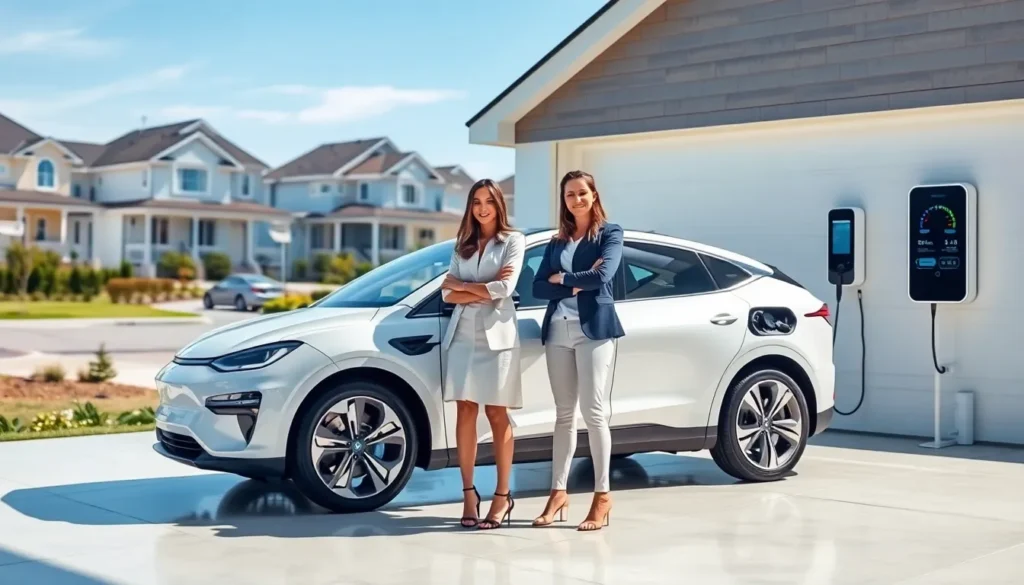
Charging an electric vehicle works much like charging a phone. Owners plug into a home outlet, a dedicated home charger, or a public charging station. Level 1 chargers use standard household outlets and add about 3-5 miles of range per hour. Level 2 chargers require a 240-volt outlet and deliver 15-30 miles per hour. DC fast chargers can add 100+ miles in 30 minutes.
The simplicity of electric vehicles means fewer moving parts. No oil changes. No spark plugs. No timing belts. This mechanical simplicity translates to lower maintenance costs over time.
Types of Electric Vehicles Available Today
The market offers several types of electric vehicles, each suited to different needs and budgets.
Battery Electric Vehicles (BEVs) run entirely on electricity. They have no gasoline engine and produce zero tailpipe emissions. Popular examples include the Tesla Model 3, Chevrolet Bolt, and Ford Mustang Mach-E. Most BEVs offer ranges between 200 and 350 miles per charge, with some luxury models exceeding 400 miles.
Plug-in Hybrid Electric Vehicles (PHEVs) combine an electric motor with a gasoline engine. They can travel 20-50 miles on electricity alone before the gas engine takes over. The Toyota RAV4 Prime and Jeep Wrangler 4xe fall into this category. PHEVs work well for buyers who want electric driving for daily commutes but need gasoline backup for longer trips.
Hybrid Electric Vehicles (HEVs) use both electric motors and gasoline engines but cannot plug in to charge. The battery charges through regenerative braking and the gas engine. The Toyota Prius popularized this technology. While HEVs improve fuel efficiency, they still rely primarily on gasoline.
Electric vehicles now span every vehicle category. Sedans, SUVs, trucks, and even performance cars are available. The Rivian R1T and Ford F-150 Lightning brought electric power to the pickup truck segment. Manufacturers like Porsche, BMW, and Mercedes offer premium electric vehicles that compete with their gasoline counterparts.
Benefits of Owning an Electric Vehicle
Electric vehicles deliver several advantages that appeal to cost-conscious and environmentally aware drivers alike.
Lower fuel costs top the list. Electricity costs less than gasoline in most regions. The average American driver spends about $1,500 annually on gasoline. An equivalent electric vehicle costs roughly $500-600 per year to charge at home. That’s a savings of nearly $1,000 every year.
Reduced maintenance adds to the savings. Electric vehicles don’t need oil changes, transmission fluid, or many of the regular services gasoline cars require. Brake pads last longer thanks to regenerative braking. Over the life of the vehicle, owners can save thousands on maintenance.
Environmental benefits matter to many buyers. Electric vehicles produce zero direct emissions. Even when accounting for electricity generation, EVs typically have a smaller carbon footprint than gasoline cars. This gap widens as electrical grids incorporate more renewable energy.
Performance surprises many new EV owners. Electric motors deliver instant torque. There’s no waiting for an engine to rev up. Many electric vehicles accelerate faster than comparable gasoline models. The driving experience feels smooth and responsive.
Incentives sweeten the deal. Federal tax credits of up to $7,500 remain available for qualifying electric vehicles. Many states offer additional rebates, tax credits, or perks like HOV lane access. These incentives can significantly reduce the upfront cost of going electric.
Challenges and Considerations for EV Buyers
Electric vehicles aren’t perfect for everyone. Buyers should understand the limitations before making a decision.
Range anxiety remains a concern. While most electric vehicles offer enough range for daily driving, long road trips require planning. Charging infrastructure has improved dramatically, but gaps still exist in rural areas. Buyers who frequently travel long distances should research charging networks along their routes.
Charging time differs from refueling with gasoline. Even DC fast chargers take 20-45 minutes to add significant range. Home charging works well overnight but requires either a garage or dedicated parking space with outlet access. Apartment dwellers and those without home charging face greater challenges.
Upfront costs tend to be higher. Electric vehicles often cost $5,000-$15,000 more than comparable gasoline models. Tax credits help offset this difference, and lower operating costs can make up the gap over time. But buyers need sufficient budget or financing for the initial purchase.
Battery degradation happens over time. Most manufacturers warranty batteries for 8 years or 100,000 miles. Real-world data shows that most batteries retain 80-90% capacity after 200,000 miles. Still, eventual battery replacement could cost $5,000-$15,000.
Cold weather affects performance. Electric vehicle range drops 20-40% in freezing temperatures. The battery works less efficiently, and heating the cabin uses significant energy. Buyers in cold climates should factor this into their range expectations.
The Future of Electric Vehicles
The electric vehicle market is growing fast. Industry analysts predict that EVs will represent over 50% of new car sales by 2035.
Battery technology continues to advance. Solid-state batteries promise greater energy density, faster charging, and improved safety. Several manufacturers plan to introduce solid-state batteries by 2027-2028. These advances could push electric vehicle ranges past 500 miles while reducing charging times.
Charging infrastructure is expanding rapidly. The U.S. government has committed $7.5 billion to build 500,000 new charging stations by 2030. Private companies are investing billions more. Fast charging networks from Tesla, Electrify America, and others are filling in gaps across highways and urban areas.
New models are launching constantly. Every major automaker has committed to electrification. General Motors plans to offer only electric vehicles by 2035. Volkswagen is investing $180 billion in EV development. More choices mean better options across price points and vehicle types.
Autonomous driving technology pairs naturally with electric vehicles. The electric architecture simplifies the integration of sensors, computers, and software. Many of the most advanced driver-assistance systems appear first in electric vehicles.
Electric vehicles represent a fundamental shift in transportation. The technology has matured, costs are falling, and infrastructure is growing. The question is no longer whether electric vehicles will become mainstream, it’s how quickly the transition will happen.