
Augmented reality trends 2026 will reshape how people work, shop, and interact with digital content. The technology has moved beyond early experiments and now enters a phase of practical, widespread adoption. Hardware is getting smaller. Software is getting smarter. And industries from retail to manufacturing are betting big on AR’s potential.
This year marks a turning point. Major tech companies are releasing consumer-ready AR glasses. AI integration is making spatial computing more intuitive. Businesses are finding real ROI in augmented reality applications. But with growth comes new questions about privacy and ethics.
Here’s what to expect from augmented reality in 2026, and why it matters.
Table of Contents
ToggleKey Takeaways
- Augmented reality trends 2026 mark a turning point with lighter, more affordable AR glasses under $500 that can be worn comfortably for 4-6 hours.
- AI-powered spatial computing enables AR systems to recognize objects, understand gestures, and deliver personalized experiences in real time.
- Retail AR adoption is accelerating, with virtual try-ons reducing product return rates by up to 25% and driving higher conversion rates.
- Enterprise AR applications in manufacturing, healthcare, and logistics are delivering measurable ROI through hands-free guidance and remote assistance.
- Privacy regulations are tightening as augmented reality trends 2026 push companies toward transparent data practices and ethical design.
- The shift from novelty to necessity means businesses investing in AR technology now will gain competitive advantages in customer engagement and operational efficiency.
Lighter and More Accessible AR Wearables
The biggest barrier to AR adoption has always been hardware. Clunky headsets and limited battery life kept augmented reality confined to niche use cases. That’s changing fast.
In 2026, AR wearables are becoming lighter, sleeker, and more affordable. Apple, Meta, and Samsung are all pushing devices that look closer to regular glasses than sci-fi goggles. Some models now weigh under 100 grams, a major improvement from earlier generations that tipped the scales at 300+ grams.
Battery technology is catching up too. New lithium-silicon batteries and more efficient processors mean users can wear AR glasses for 4-6 hours on a single charge. That’s enough for a workday or a shopping trip.
Price points are dropping as well. Entry-level AR glasses are now available under $500, opening the market to everyday consumers. This accessibility is a key augmented reality trend for 2026. When more people can afford and comfortably wear AR devices, adoption accelerates.
Display quality has improved dramatically. Waveguide technology now delivers brighter, sharper images even in outdoor settings. Users can see digital overlays clearly without squinting or retreating to dimly lit rooms.
The result? AR wearables are finally practical for daily use. People are wearing them to navigate cities, attend virtual meetings, and even cook dinner with recipe overlays.
AI-Powered Spatial Computing Advancements
Augmented reality trends 2026 are inseparable from artificial intelligence. AI is the engine making AR experiences smarter, faster, and more personalized.
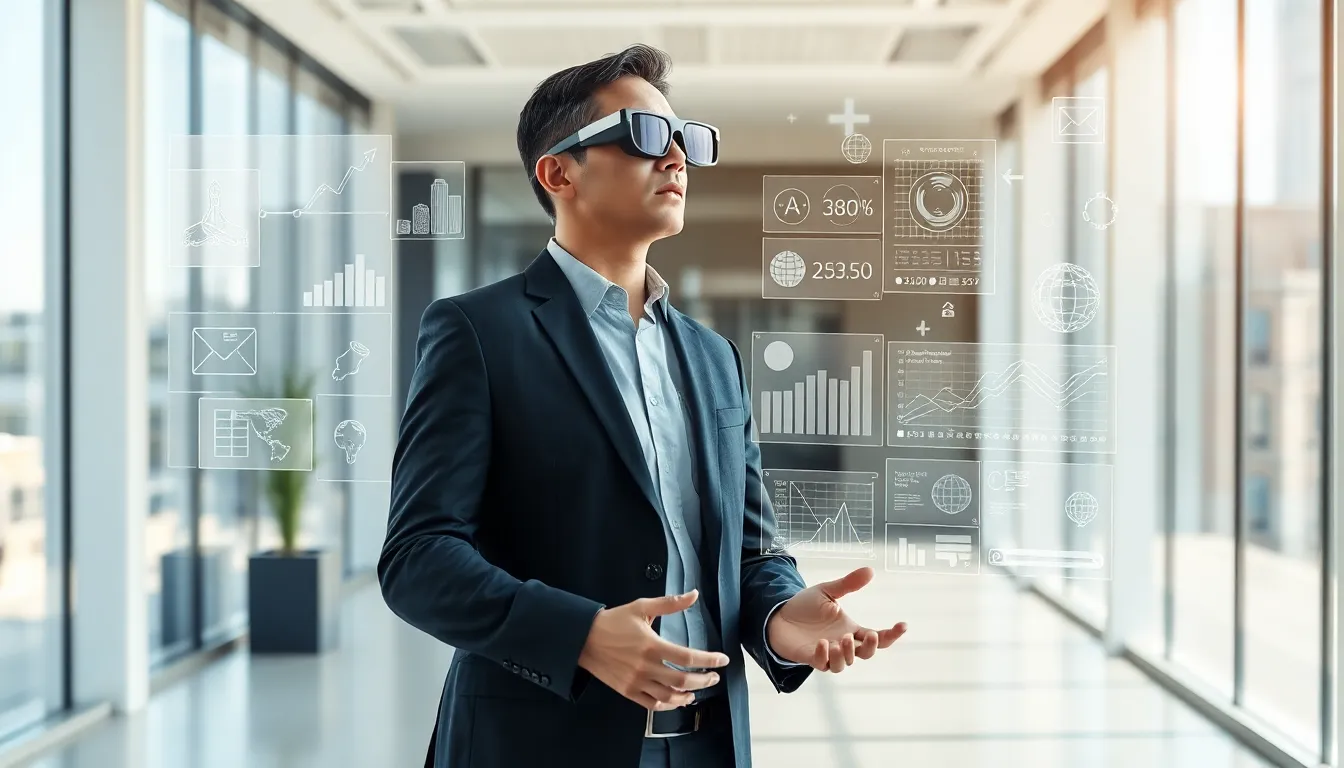
Spatial computing, the ability to map and understand physical environments, has taken a leap forward. Modern AR systems use AI to recognize objects, surfaces, and even gestures in real time. This means digital content can interact with the real world more naturally. A virtual pet can walk around furniture. A design prototype can sit on an actual desk.
Scene understanding has gotten remarkably accurate. AI algorithms now identify thousands of objects and predict user intent based on context. Looking at a broken appliance? Your AR glasses might automatically pull up a repair tutorial.
Voice and gesture controls are becoming the primary input methods. Users can summon information, resize digital objects, or dismiss notifications with simple hand movements or spoken commands. The learning curve is shrinking.
Personalization is another major development. AI tracks preferences and habits to customize AR experiences. The system learns which notifications matter most, which apps get used frequently, and how users prefer to organize their digital workspace.
These AI-powered spatial computing advancements are making augmented reality feel less like using a device and more like having a helpful assistant integrated into the environment.
Expansion of AR in Retail and E-Commerce
Retail is embracing augmented reality like never before. By 2026, AR shopping experiences are moving from novelty to necessity.
Virtual try-ons have become standard. Customers can see how clothes fit, how makeup looks, or how furniture appears in their homes, all before purchasing. Studies show AR try-ons reduce return rates by up to 25%. That’s a significant cost saving for retailers.
In-store AR is growing too. Shoppers point their phones or glasses at products to see reviews, nutritional information, or styling suggestions. Some stores use AR navigation to guide customers directly to items on their shopping lists.
E-commerce platforms are integrating AR across product categories. Home goods, fashion, electronics, and cosmetics all benefit from 3D visualization. Customers make more confident purchase decisions when they can see products in context.
Brands are also using augmented reality for marketing. Interactive AR ads let consumers engage with products before visiting a store or website. A car company might let someone place a virtual vehicle in their driveway. A sneaker brand might let fans customize colors in real time.
The augmented reality trend in retail is clear: immersive experiences drive sales. Retailers investing in AR technology are seeing higher conversion rates and stronger customer loyalty.
Enterprise and Industrial AR Applications
Consumer applications get the headlines, but enterprise AR is where serious money flows. In 2026, augmented reality is transforming how businesses operate.
Manufacturing leads the way. Workers use AR glasses to view assembly instructions overlaid directly on machinery. This hands-free guidance reduces errors and speeds up training. New employees can become productive faster when step-by-step visuals guide them through complex tasks.
Remote assistance is another major use case. Field technicians can share their view with experts located anywhere in the world. The expert can draw annotations that appear in the technician’s field of vision. Problems get solved without expensive site visits.
Healthcare is adopting augmented reality for surgery planning and medical training. Surgeons can view patient scans as 3D holograms, exploring anatomy from every angle before making incisions. Medical students practice procedures on virtual patients.
Architecture and construction firms use AR to visualize building plans on actual job sites. Project managers can spot design conflicts before they become costly mistakes. Clients can walk through virtual versions of spaces that don’t exist yet.
Logistics companies track inventory and optimize warehouse layouts with AR overlays. Workers see exactly where items should go, reducing picking errors and improving efficiency.
These enterprise augmented reality trends 2026 show that AR isn’t just about entertainment, it’s a productivity tool with measurable business impact.
Privacy and Ethical Considerations
As augmented reality becomes pervasive, concerns about privacy and ethics are growing louder. AR devices equipped with cameras and sensors collect enormous amounts of data. Where does that data go? Who controls it?
In 2026, regulators are paying attention. New laws in the EU and several US states require transparency about AR data collection. Companies must disclose what information their devices capture and how it’s used.
Consent is a thorny issue. When someone wears AR glasses in public, they’re recording everyone around them. Bystanders didn’t agree to be filmed or analyzed. Some venues are banning AR devices. Others are requiring visible indicators that show when recording is active.
Facial recognition in AR raises particular concerns. Should glasses be able to identify strangers on the street? Most manufacturers are limiting this capability, but the technology exists.
Data security matters too. AR systems map private spaces in detail. A breach could expose intimate information about someone’s home or workplace.
Ethical design is becoming a selling point. Companies that prioritize privacy, with on-device processing, minimal data retention, and clear user controls, are earning consumer trust.
The augmented reality trends 2026 include a growing awareness that the technology must be developed responsibly. Innovation shouldn’t come at the cost of fundamental rights.