

Apps trends 2026 will reshape how people interact with their devices. The mobile app industry continues to grow, with global revenue expected to exceed $600 billion by the end of 2026. Developers and businesses must pay attention to the shifts happening right now. From smarter AI features to privacy-focused design, the apps trends 2026 will bring reflect changing user expectations. This article breaks down the four major developments that will define app development and user experience in the coming year.
Table of Contents
ToggleKey Takeaways
- Apps trends 2026 will be shaped by AI-powered personalization, with users expecting apps to anticipate their needs through predictive content and dynamic interfaces.
- Super apps are expanding into Western markets as users prefer consolidated platforms over downloading multiple apps.
- Privacy-first design is now mandatory, requiring developers to prioritize first-party data, transparent practices, and minimal permission requests.
- Cross-platform and ambient computing experiences will define app success, as users expect seamless transitions between phones, tablets, wearables, and voice interfaces.
- Developers must integrate AI from the start and build for multi-device experiences to stay competitive in the evolving app landscape.
AI-Powered Personalization Takes Center Stage
Apps trends 2026 show that artificial intelligence will drive personalization to new levels. Users now expect apps to anticipate their needs before they ask. AI-powered features analyze behavior patterns, preferences, and usage history to deliver customized experiences.
Several key developments are shaping this trend:
- Predictive content delivery: Apps will surface relevant content based on time of day, location, and past behavior. A fitness app might suggest a quick workout when a user’s calendar shows a 30-minute gap.
- Dynamic interface adjustments: Machine learning algorithms will modify app layouts based on individual usage patterns. Frequently used features move to prominent positions automatically.
- Natural language processing improvements: Voice commands and chatbots will handle complex requests with greater accuracy. Users can speak naturally instead of learning specific command phrases.
The apps trends 2026 also point toward on-device AI processing. This approach keeps sensitive data on the user’s phone rather than sending it to external servers. Apple, Google, and Samsung have invested heavily in on-device machine learning chips. Apps can now run sophisticated AI models without an internet connection.
For developers, this means building with AI integration from the start. Apps that feel generic or static will struggle to retain users. The apps trends 2026 make personalization a baseline expectation, not a premium feature.
The Rise of Super Apps in Western Markets
Super apps have dominated Asian markets for years. WeChat and Grab combine messaging, payments, shopping, and services in single platforms. Now, apps trends 2026 indicate that Western companies are pursuing similar strategies.
Meta, Apple, and Google have each expanded their app ecosystems. Meta’s suite now includes messaging, marketplace features, and payment options. Apple continues to add financial services and health tracking to its core apps. These moves signal a shift toward consolidated digital experiences.
Why are super apps gaining traction now? Three factors stand out:
- User fatigue: People download fewer apps than five years ago. The average smartphone user opens just 10 apps daily. Consolidation reduces the need to switch between multiple platforms.
- Payment integration: Digital wallets and in-app purchases have matured. Users trust apps with their financial information more than before.
- Ecosystem lock-in: Companies benefit when users complete more tasks within their platforms. Higher engagement translates to better data and advertising opportunities.
The apps trends 2026 suggest that mid-sized apps face pressure from both directions. Large platforms absorb their features, while niche apps capture specific audiences. Developers must decide whether to build within existing ecosystems or carve out specialized positions.
Regulatory scrutiny remains a factor. Antitrust concerns in the US and EU may slow super app expansion. But, the apps trends 2026 point toward continued consolidation even though these challenges.
Privacy-First Design Becomes the Standard
Privacy concerns have reshaped app development over the past few years. Apps trends 2026 confirm that privacy-first design is now mandatory, not optional.
Apple’s App Tracking Transparency feature changed the industry in 2021. By 2026, similar restrictions exist across all major platforms. Android’s Privacy Sandbox limits cross-app tracking. The EU’s Digital Markets Act imposes strict data handling requirements on large platforms.
These changes affect how apps collect and use data:
- First-party data becomes essential: Apps must build direct relationships with users to gather useful information. Third-party data sources are increasingly restricted.
- Contextual targeting replaces behavioral tracking: Advertisers show ads based on current content rather than user history. A sports app displays athletic gear ads without knowing the user’s browsing history.
- Transparent data practices: Users expect clear explanations of what data apps collect and why. Vague privacy policies create distrust.
Apps trends 2026 also show growing demand for data minimization. Users want apps that request only necessary permissions. An app that asks for contact access without clear justification raises red flags.
Developers who embrace privacy-first design gain competitive advantages. Trust drives retention. Apps that respect user data build stronger long-term relationships than those that exploit it.
Cross-Platform and Ambient Computing Experiences
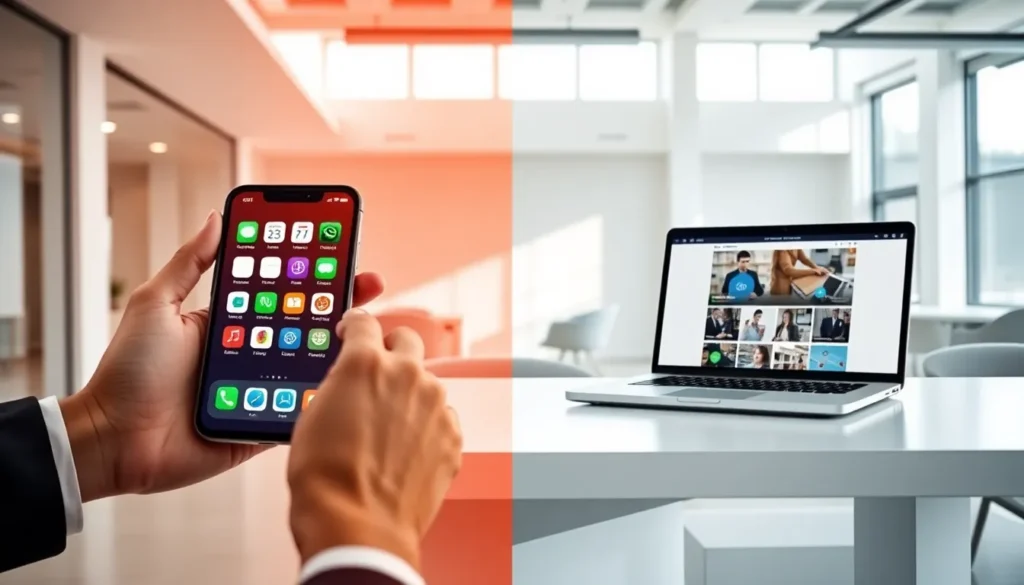
The smartphone is no longer the only screen that matters. Apps trends 2026 emphasize cross-platform experiences that flow between devices. Users start tasks on their phones and finish them on tablets, laptops, or smart displays.
Apple’s Continuity features set early standards for this approach. Android and Windows have followed with similar handoff capabilities. By 2026, users expect seamless transitions as a default behavior.
Ambient computing pushes this further. Apps trends 2026 show growing interest in experiences that exist beyond traditional screens:
- Wearable integration: Smartwatches and fitness trackers handle more standalone functions. Users complete transactions, respond to messages, and track health metrics without pulling out their phones.
- Voice-first interfaces: Smart speakers and earbuds provide app access through conversation. Podcast apps, navigation tools, and productivity software adapt to audio-only interaction.
- Automotive platforms: CarPlay and Android Auto have matured. Apps designed for in-car use represent a growing category.
The apps trends 2026 require developers to think beyond single-device experiences. An app that works only on phones misses significant usage contexts. Design decisions must account for different screen sizes, input methods, and attention levels.
This shift creates opportunities for apps that solve problems across contexts. A note-taking app that syncs instantly between phone, tablet, and computer offers genuine value. Apps trends 2026 reward those who build for the multi-device reality users already live in.